As someone who’s worked with data for over 20 years and with many cloud platforms, my main focus has always been on helping teams streamline their development process. A key area of my expertise is mentoring engineers to adopt DevOps principles to optimise workflows, automate infrastructure provisioning, and deliver value to clients more efficiently. With Microsoft Fabric’s Git integration, this opens up a powerful chapter for teams looking to enhance their DevOps capabilities. But it’s not just about adding Git; it’s about leveraging Microsoft Fabric’s lifecycle management tools to bring real, measurable improvements in how we deliver software.
Lifecycle Management in Microsoft Fabric
One of the standout features in Microsoft Fabric is its comprehensive lifecycle management tools. These tools provide a standardised approach for communication and collaboration across all members of a development team. This is crucial because it ensures that everyone, from developers to operations teams, is on the same page throughout the lifecycle of a product. Effective lifecycle management accelerates the process of getting new features and bug fixes into production, creating an ongoing flow of improvements without bottlenecks.
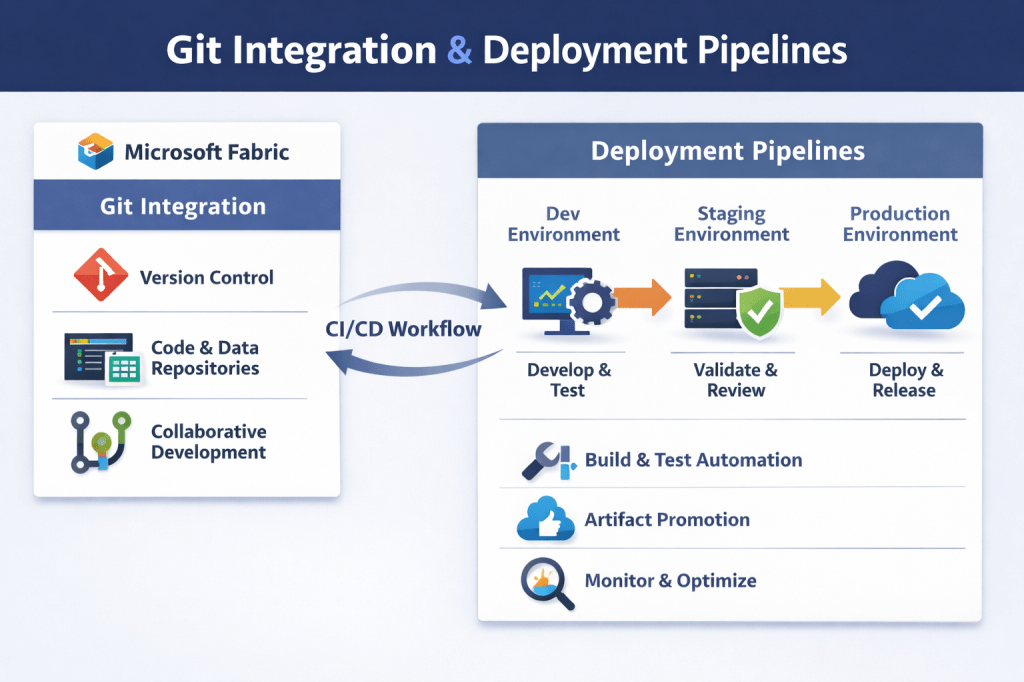
The beauty of lifecycle management in Fabric lies in its two key components: Git Integration and Deployment Pipelines. By integrating Fabric’s Git-based workspace updates, your teams can automate the build, test, and release pipelines to ensure that your development cycles are faster, more reliable, and less prone to human error. This makes it easier to deliver new content to production quickly, whether it’s a bug fix, a security patch, or a shiny new feature that adds value to the end users. Git integration plays a central role here, allowing seamless version control and collaboration, enabling developers to work on different features concurrently without stepping on each other’s toes.
DevOps in Fabric: The Missing Piece
Now that Microsoft Fabric has Git integration, we can start applying true DevOps principles within the platform. DevOps isn’t just about automating processes—it’s about fostering collaboration, improving communication, and breaking down silos. As I work with teams, one of the first things I do is help them understand how automation and lifecycle management can be paired with DevOps practices to create a more efficient and cohesive workflow.
Mentoring engineers is one of the most rewarding aspects of my role. I work closely with teams to automate secure code builds and the infrastructure that provisions those builds. This enables development teams to focus more on coding and less on worrying about the underlying infrastructure. In a Microsoft Fabric environment, this could mean automating the deployment of entire data pipelines or deploying updates to dashboards and reports with minimal manual intervention. By streamlining these processes, development teams can release new features or updates much more quickly, which is a key tenet of both DevOps and successful software development in general.
Helping Clients Realise Value
Ultimately, the goal of applying DevOps principles to cloud platforms like Microsoft Fabric is to help my clients deliver more value to their customers. Through optimising tooling, refining delivery processes, and looking for better ways for teams to work together, I help businesses improve not just their speed of delivery but also the quality of the product. Whether it’s reducing the risk of deployment failures or ensuring that the infrastructure is cost-effective and scalable, the right approach to lifecycle management in Fabric can make all the difference.
In short, with Git integration now a part of Microsoft Fabric, it’s easier than ever to put DevOps practices into action. By leveraging the platform’s lifecycle management tools and automating infrastructure provisioning, we can help our clients unlock the full potential of Fabric, delivering better software faster and with more confidence. That’s what excites me about the future of DevOps in this space, and it’s what I’m looking forward to helping my clients achieve in the months and years ahead.
Extended Reading
DevOps in Microsoft Fabric isn’t just about turning on Git—it’s about understanding how lifecycle management, pairing, and deployment pipelines work together. Here are some articles if you want to see exactly how to configure these features to put your ideas into reality.
What is application lifecycle management in Microsoft Fabric?
 The Blog of The Hybrid DBA