The Intersection Between DevOps and FinOps

DevOps is about shortening the system development lifecycle. Plan faster, build faster, test faster, deploy faster. But while we accelerate delivery, why not shorten the expense lifecycle as well? Every deployment consumes compute, every environment uses storage, and every scaling rule involves cost. Speed and spend are linked and move together.

If we’re eliminating inefficiency in delivery, it only makes sense to tackle inefficiency in spending too. This is where DevOps and FinOps are best mates.

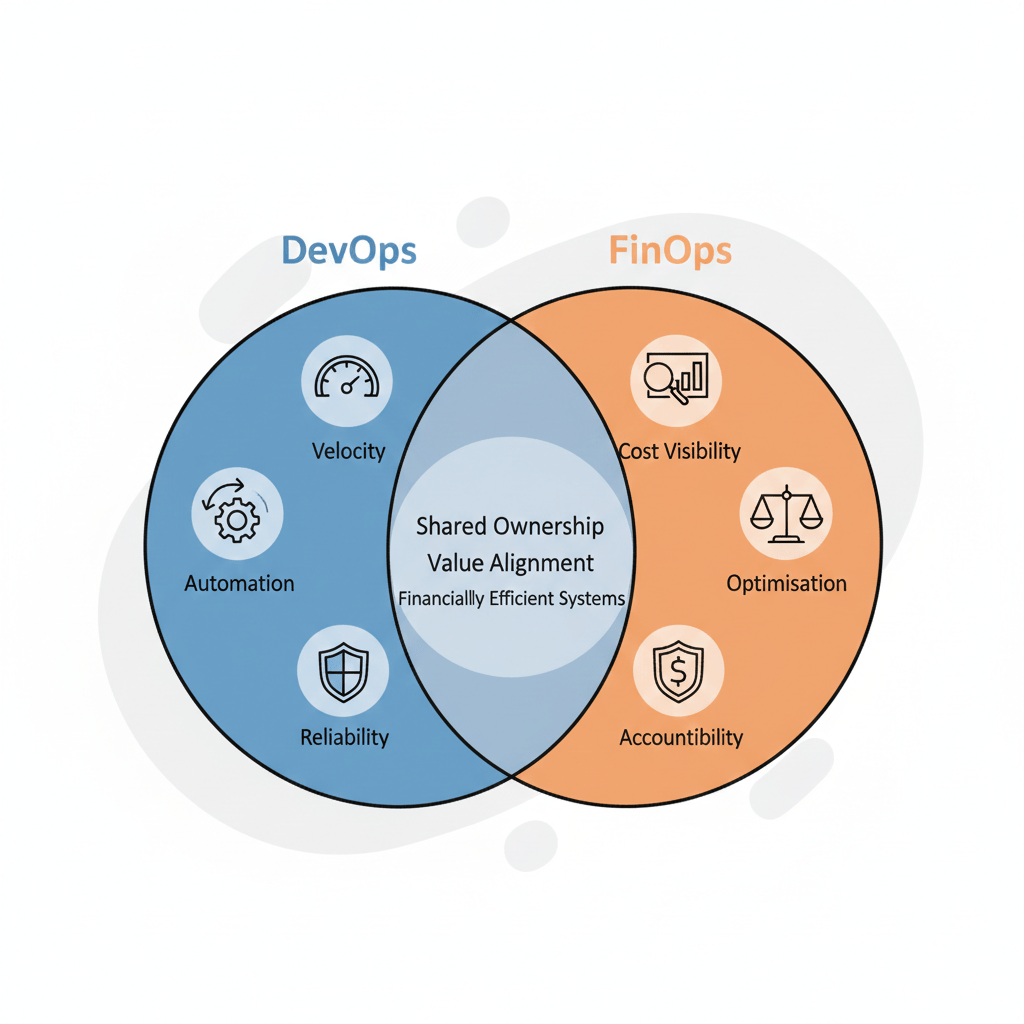
DevOps Accelerates. FinOps Optimises.

DevOps removes software inefficiencies, FinOps removes financial waste. DevOps focuses on velocity, reliability, and smooth delivery through automation and collaboration. FinOps adds another layer of discipline, and it does not slow teams down. It ensures that hard-earned velocity doesn’t turn into uncontrolled spending. Acceleration without optimisation increases risk, and optimisation without acceleration limits innovation.

Cost is a System Metric

We already treat latency, uptime, and deployment frequency as indicators of system health, and costs deserve the same respect. Infrastructure sizing, storage strategies, and scaling configurations also carry financial weight. When cost is part of the observable system metrics, engineers start thinking in a more complete way. Decisions are more than just about speed or performance; they’re about delivering value efficiently. This approach strengthens innovation, ensuring systems are both fast and financially responsible.

The Real Intersection

The true intersection between DevOps and FinOps lies in shared ownership. DevOps processes own how systems are built and delivered, and FinOps practices ensure those systems operate with financial clarity and control. They connect engineering execution directly to business sustainability. This integration transforms cloud operations from reactive cost management to proactive optimisation. Instead of discovering inefficiencies after billing cycles close, teams gain continuous insight into the financial impact of their decisions.
Conclusion

Shortening the development lifecycle improves time to market. Shortening the expense lifecycle improves operational efficiency. Organisations that integrate both build systems that are scalable, reliable, and economically sustainable. The smartest engineering teams treat speed and cost as inseparable metrics: the true measure of cloud maturity.

Yip.
Cultural Change: Fostering a Cost-Aware Culture in Your Organisation

After working deep in cloud operations, I’ve learned that FinOps isn’t really about dashboards or optimisation scripts. Tools can highlight waste, but culture determines whether anyone acts on it. A cost-aware organisation doesn’t happen overnight; it’s built intentionally. Here’s how I approach creating that shift.

Make Costs Visible to Everyone

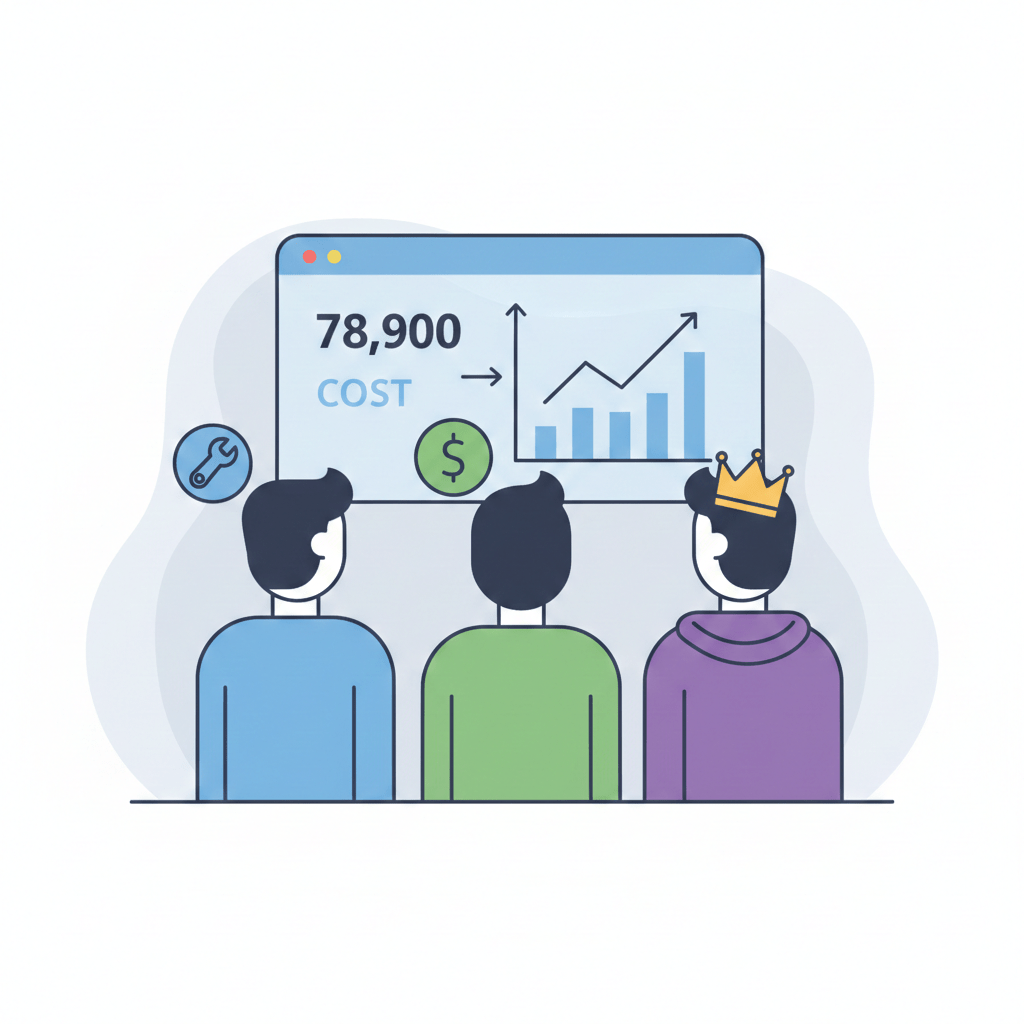
Cost awareness starts with transparency. If cloud spending lives in a finance report that engineers never see, nothing changes. I make cost data accessible and easy to understand across teams. When developers can connect their architectural decisions to real financial impact, something clicks. Cost stops being an abstract number and becomes part of daily engineering thinking. Visibility drives responsibility.

Educate Teams About Cloud Costs

Most engineers optimise for performance and reliability naturally. But without understanding pricing models and consumption patterns, cost becomes an afterthought. I focus on practical education: how services are billed, what causes spikes, and how small design choices influence long-term spend. Once teams understand the mechanics behind cloud billing, they start weighing cost alongside scalability and speed. That’s when FinOps thinking becomes embedded in decision-making.

Encourage Shared Ownership Across Teams

FinOps works best when cost is everybody’s job. I create regular touchpoints where engineering, finance, and leadership review cloud usage together. These discussions align technical roadmaps with financial priorities and remove the “us vs them” dynamic. When accountability is shared, optimisation becomes collaborative rather than corrective.

Empower Action, Not Just Awareness

Awareness without action leads to frustration. Once teams understand costs, they need clear ways to optimise. I integrate cost considerations into planning cycles, architectural reviews, and deployment workflows. When optimisation becomes part of normal operations instead of a separate initiative, cost efficiency feels natural instead of forced.

Celebrate Cost-Conscious Wins

Culture sticks when behaviour is reinforced. I make a point of recognising teams who design efficiently or proactively reduce waste. Celebrating cost-aware decisions shifts the narrative from “cost control” to “smart engineering.” It reframes efficiency as innovation rather than restriction.

Conclusion

A cost-aware culture isn’t built through mandates but through visibility, education, collaboration, empowerment, and example. When cost becomes part of everyday engineering judgment rather than a quarterly surprise, FinOps stops being a framework and becomes a habit. And that’s when cloud efficiency turns into long-term competitive advantage.

Future-Proofing: How to Stay Ahead in FinOps

Cloud environments don’t sit still. Pricing models change, services evolve, workloads grow, and suddenly last year’s “perfectly optimised” setup isn’t so perfect anymore. Over time, I’ve realised that FinOps isn’t just about controlling today’s costs — it’s about building habits and systems that still work next year.

Here’s how I future-proof FinOps in the real world.

Embrace Automation

Manual optimisation doesn’t scale, and FinOps shouldn’t depend on someone remembering to clean things up. I design environments where elasticity is the default — resources expand and contract based on demand. Automation supports one of the core FinOps principles: pay for value, not potential. When infrastructure adjusts dynamically, cost efficiency becomes built-in rather than reactive.

Prioritise Real-Time Visibility

FinOps fails when cost data is delayed or disconnected from daily work. I make sure visibility is continuous and accessible to the teams creating the spend. When engineers can see the financial impact of their decisions in real time, cost awareness becomes part of engineering judgment — not an afterthought discussed at month-end reviews. Visibility transforms spending from a finance metric into an operational signal.

Shift From Tracking to Forecasting

Managing today’s bill is important, but future-proofing means anticipating tomorrow’s growth. I use historical patterns and workload trends to inform budgeting conversations early. Forecasting connects engineering plans with financial expectations, which prevents reactive cost-cutting later. In FinOps, predictability builds trust, and trust enables smarter scaling decisions.

Strengthen Cross-Functional Ownership

FinOps only works when accountability is shared. I focus on building routines where engineering, finance, and leadership align regularly on cost, performance, and priorities. When cost discussions are normal and transparent, optimisation becomes cultural rather than corrective. Long-term success isn’t about tools; it’s about consistent collaboration.

Stay Adaptable

Cloud providers constantly evolve pricing structures and services. Future-proofing FinOps means staying curious and periodically reassessing architecture decisions. I treat cost strategy as something iterative, not fixed. What was efficient last year may not be optimal today, and that’s okay. Adaptability is the advantage.

Conclusion

Future-proof FinOps isn’t about controlling cost aggressively; it’s about building systems, habits, and culture that keep spending aligned with value over time. When automation, visibility, forecasting, collaboration, and adaptability work together, cost management stops being reactive and becomes strategic. And that’s when FinOps shifts from budget protection to competitive advantage.

Overcoming Challenges: Navigating Common Pitfalls in FinOps Adoption

Working in DevOps, I’ve seen FinOps do amazing things for cloud cost control, but I’ve also watched teams stumble during adoption. FinOps sounds simple in theory: collaborate, track costs, optimise continuously. In reality, organisations run into the same roadblocks again and again. The good news? Most of them are predictable and fixable, once you know what to look for.

Here are some of the most common FinOps pitfalls I’ve run into, plus the practical ways I’ve learned to navigate them.

Lack of Cost Visibility

Pitfall: One of the biggest issues is the lack of real-time visibility into cloud costs. Many teams spin up resources without understanding the financial impact, which quietly leads to overspending and awkward end-of-month surprises.

My Fix: I always start with visibility. Real-time dashboards, clear reporting, and strong tagging policies make spending transparent. Once teams see costs tied directly to their resources, behaviour shifts fast. Awareness is usually the first step toward accountability.

Siloed Teams

Pitfall: Engineering focuses on performance, finance tracks budgets, and leadership looks at strategy, but nobody shares the same view of cloud spending. These silos slow down decision-making and hide optimisation opportunities.

My Fix: I introduce shared dashboards and regular cross-functional cost reviews. When everyone looks at the same data, conversations become collaborative instead of defensive. FinOps works best when technical and financial discussions happen together.

Inconsistent Resource Tagging

Pitfall: Poor tagging makes cost allocation messy and turns optimisation into guesswork. Without clear ownership, nobody knows which team or project is responsible for rising expenses.

My Fix: A simple, consistent tagging rule is enforced: owner, environment, project, and purpose. Automation keeps tagging consistent without relying on memory. Once tagging improves, cost tracking becomes clear and actionable instead of confusing.

Treating Optimisation as a One-Time Task

Pitfall: Some teams run a single optimisation project and assume the work is finished. Over time, idle resources and oversized workloads creep back in, slowly inflating costs again.

My Fix: I push for continuous optimisation. Automation, regular reviews, and ongoing monitoring keep environments efficient as workloads change. FinOps isn’t a cleanup exercise; it’s more like regular maintenance that prevents problems from returning.

Overcomplicating the Process

Pitfall: Some organisations try to implement every FinOps tool and process at once, which overwhelms teams and creates unnecessary complexity.

My Fix: Keep things simple at the start: basic visibility, tagging, and obvious optimisation wins. As confidence grows, we gradually introduce more advanced practices. A phased approach keeps adoption manageable and sustainable.

Conclusion

Most FinOps challenges aren’t technical mysteries. They’re predictable gaps in visibility, collaboration, or process. With simple structures, shared accountability, and continuous improvement, teams usually find their rhythm quickly. And when engineers start asking about cost before launching resources, you know FinOps has officially become part of everyday engineering, which means far fewer dramatic cloud bills later on.

Case Studies: Real-World Success Stories of FinOps Implementation

Learning any kind of theory is easy, but adapting FinOps and watching it rescue a chaotic cloud environment is where it gets interesting. FinOps is about building a culture where teams understand the financial impact of their technical decisions without killing innovation. Here are a few real-world style stories that remind me why FinOps actually matters.

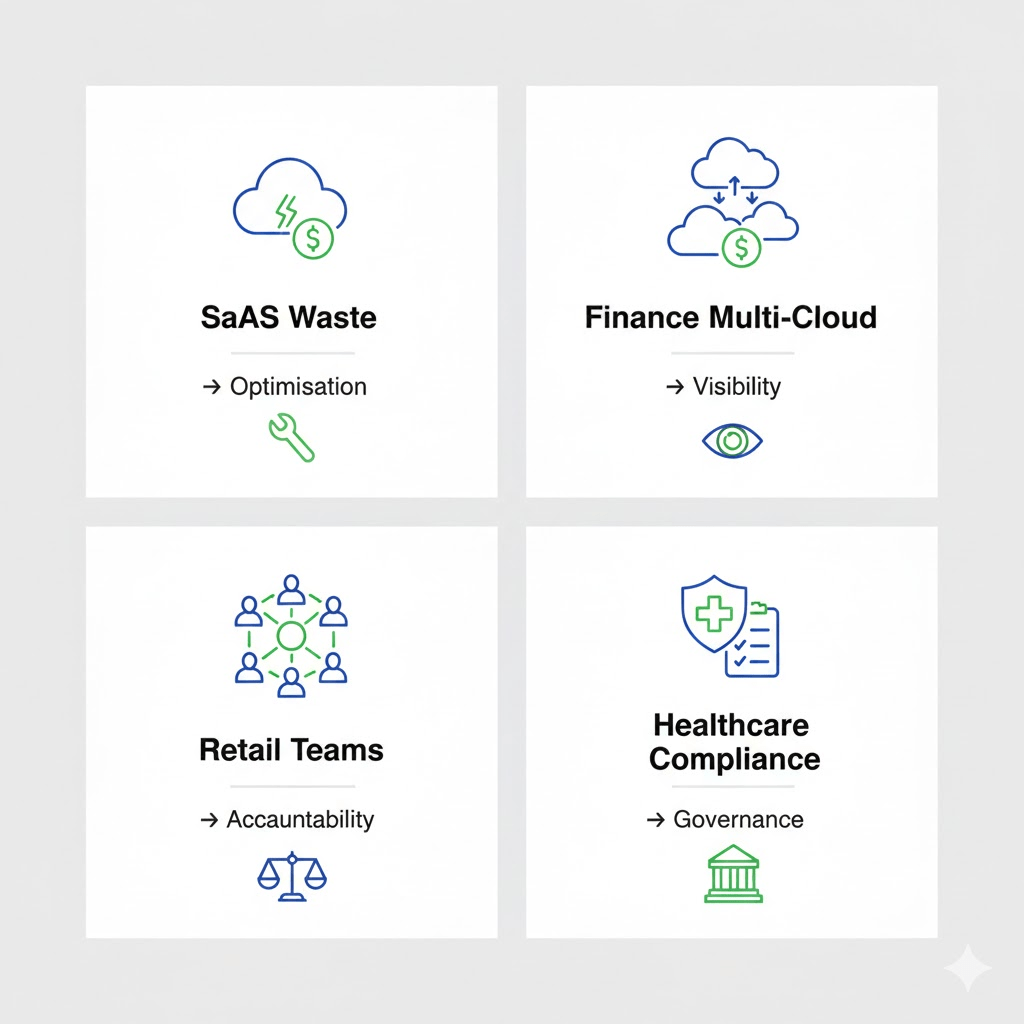
The SaaS Team That Accidentally Collected Sleeping Servers

One SaaS company I worked with scaled fast — which is great — except their cloud bill scaled even faster. Resources were deployed everywhere: unused instances, idle databases, oversized infrastructure… basically a museum of forgotten experiments. We started with visibility: strict tagging, cost dashboards, and regular reviews. Once we could see the waste clearly, engineering introduced auto-scaling and committed workloads to long-term pricing models.

Result: about 30% cost reduction in six months — without slowing product growth. Turns out, deleting unused stuff is surprisingly effective.

The Multi-Cloud Financial Maze

Another organisation ran workloads across multiple cloud platforms. Visibility was messy, cost allocation was guesswork, and finance meetings felt like solving puzzles with missing pieces. We focused on consistent tagging, unified dashboards, and better forecasting. Once spending became transparent, teams could actually make informed decisions instead of reacting to invoices after the fact.

Result: roughly 25% reduction in spend and far fewer awkward conversations between engineering and finance. Everyone finally spoke the same language: data.

Retail Teams Doing Their Own Thing (Very Expensively)

In a large retail environment, every business unit deployed resources independently. Innovation was high — accountability was… optional. Costs spiralled because nobody could see the bigger picture. We embedded cost dashboards into daily workflows and ran regular cross-team reviews. Suddenly engineers could see the real financial impact of their architecture decisions.

Result: around 20% savings, but more importantly, a culture shift. Teams didn’t stop innovating — they just started innovating responsibly.

Healthcare, Compliance, and Cloud Complexity

Healthcare environments bring extra challenges: strict regulations, complex infrastructure, and absolutely no room for mistakes. Optimising costs without touching compliance felt like walking a tightrope. We built a central visibility platform with governance policies and automated optimisation tools to right-size workloads and remove idle resources safely.

Result: about 15% cost reduction while improving compliance visibility. The organisation gained confidence to scale without worrying about security trade-offs.

Conclusion

Across all industries, the pattern is always the same. Visibility drives accountability, accountability drives smarter decisions, and smarter decisions naturally reduce waste. FinOps works best when it’s not treated as a finance-only exercise but as part of everyday engineering culture. My favourite outcome isn’t just the cost savings. It’s when engineers start asking, “Do we actually need this resource?” before launching it, which means the next cloud bill is a lot less dramatic for everyone involved.